Retail robots are moving from fixed tasks toward work that changes from hour to hour. AI helps them read shelves, spot objects, plan routes, and adjust when a shopper or trolley blocks the aisle.
Quick read
- Cameras and LiDAR help a robot build a live map of the store.
- Software can compare shelf images with product records and flag gaps.
- The hard part is still safe, useful work around people and changing stock.
What AI adds to a retail robot
A basic mobile robot can follow a set route. An AI-based system can use camera images, LiDAR, and wheel data to work out where it is and what sits around it.
This process is called simultaneous localization and mapping, or SLAM. The map helps the robot choose a route and update it when the store changes.
That matters in retail because aisles rarely stay clear. A delivery cart may block a path, a display may move, or a shopper may stop in front of the robot. It needs to slow down, find another route, or wait without hitting anyone.
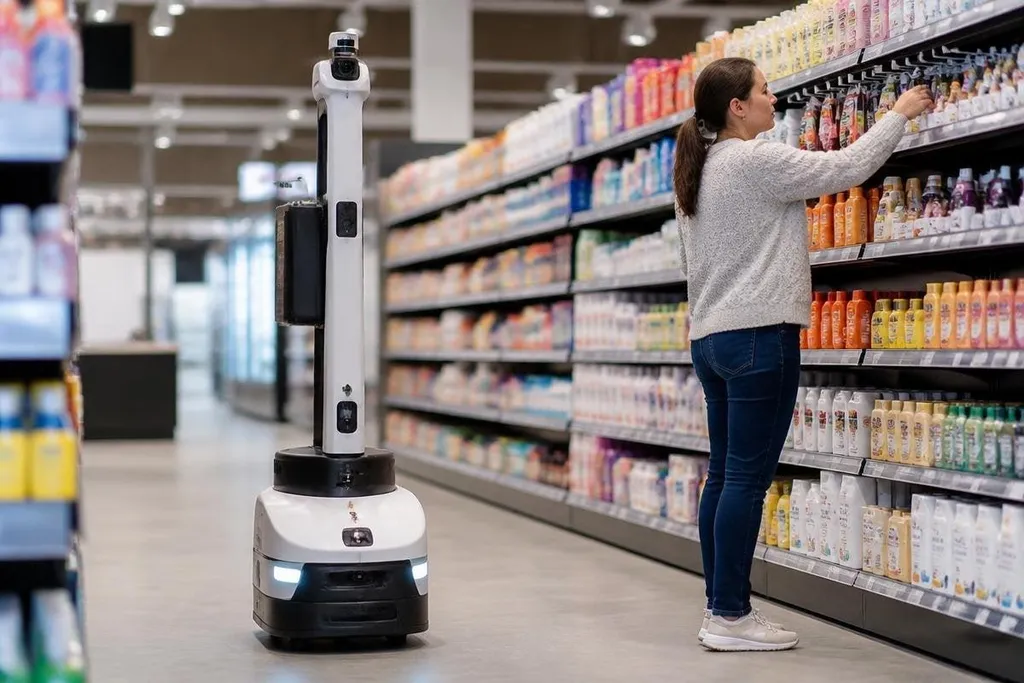
AI also helps with visual checks. A shelf-scanning robot can compare a new image with product data, then flag an empty space, a misplaced item, or a label that needs human review. The robot doesn't need to decide every case on its own. Sending uncertain results to a worker can be safer than guessing.
Where the work becomes useful
Inventory is one of the clearest uses. A robot can scan shelves during opening hours or after closing, while software turns the images into a list of possible stock errors. That list can help a store worker spend time on the shelves that need attention instead of checking every aisle by hand.
Cleaning robots use a similar pattern. They combine a map with sensors that detect people, furniture, spills, and changes in floor space. AI can help the robot select a route and react when the planned path stops working.
Some retail systems also move goods inside a store or stockroom. The robot may carry a tote, follow a worker, or travel between a back room and a pickup area. The value comes from repeat trips, especially when the route is long and the load is clear.
A robot that spots an empty shelf still needs to send a useful result to staff. A report from Robot24 can connect that result to the robot, store task, and test setting. Those details matter before you decide whether the software saves staff time or adds another job.
The limits are easy to miss
Retail data changes fast. New packaging can confuse a vision model. Low light can alter an image. A sale display can make one product look like another. A robot that works well in a test aisle may need more checks across a full store.
People create a second problem. Shoppers move in ways the robot cannot predict from a fixed route. Children may approach it, workers may carry boxes across its path, and narrow aisles leave little space for a safe turn.
Connectivity and maintenance matter too. A robot may need a wireless link for software updates or remote help. Its cameras need clean lenses, its wheels need care, and its battery needs a charging plan that fits store hours. AI does not remove those daily jobs.
Cost is another open point. A store must count the robot, charging equipment, software, repairs, staff time, and any changes to the building. A lower purchase price can still lead to a poor result if workers spend each shift clearing routes or checking false alerts.
A buying check for store teams
Before a pilot, check these points:
- Name the task: Write down the repeated job, its hours, and the result a worker needs.
- Test the floor: Run the robot near shelves, carts, people, doors, and the lighting used during normal work.
- Count false alerts: Record how often staff must correct an empty-shelf or object label.
- Plan recovery: Decide who handles blocked routes, lost maps, low batteries, and sensor faults.
- Measure the full cost: Include setup, software, repairs, training, and time spent checking results.
- Set a stop rule: End the pilot if the robot misses the agreed work rate or creates extra safety work.
AI can make a retail robot more flexible, but flexibility has to show up in a store task that saves staff time or improves stock accuracy. I'd skip a pilot that measures robot activity instead of the work completed.
The next useful test is simple: run the robot through a busy store for a full shift, record every stop and correction, then compare that record with the task's labor cost.