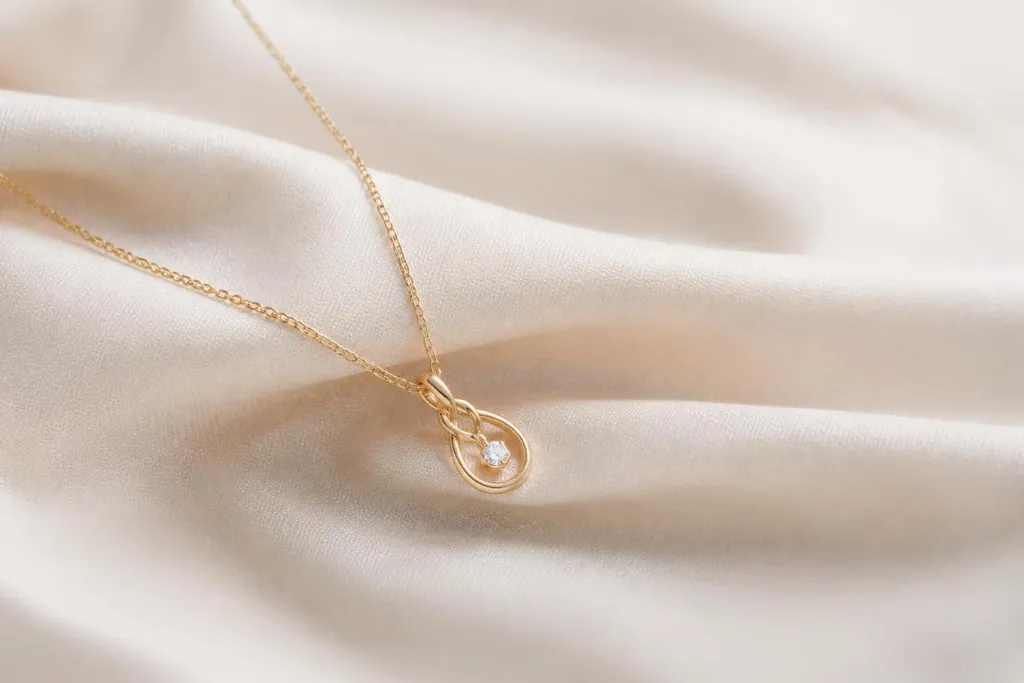
The most memorable jewellery usually has a clear point of view. Here, that distinction comes from decisions that can be appreciated immediately yet become more interesting with closer attention. At its best, the design places one meaningful detail at the centre of an otherwise restrained necklace. That clear purpose offers more than a passing trend: it creates an aesthetic that can be adapted to personal taste without losing its essential character. The intended impression is balanced, with a result that remains practical.
To compare finished interpretations in a focused selection, view the pendants collection. This gives the eye a consistent reference point for deciding which proportions feel elegant, which details feel useful and where personal preference should lead. The aim is not to identify one universally superior option, but to recognise the most coherent combination for the intended wearer.
Understanding the Design's Character
The style succeeds through visual hierarchy. The pendant can act as a quiet signature piece, particularly when its scale and chain length suit everyday necklines. A disciplined design preserves this identity even when colour, extra stones or a more decorative finish are introduced. That discipline keeps the composition balanced rather than overstated, while supporting a piece that remains practical.
The less obvious view is equally revealing. Chain, clasp, jump rings and pendant bail must work as one system; each component should have enough strength without looking heavy beside the central detail. A polished design carries the same logic through every angle, so the profile feels connected to the first impression rather than treated as an afterthought. From every angle, the workmanship should look balanced and feel practical.
Choosing Scale, Fit, and Materials
Selection should begin with the feature that changes the appearance most: choose the motif or stone for personal relevance, then check the drop, weight and chain strength so the piece hangs correctly. This approach keeps specifications in context and prevents a single number or label from dominating the decision. Such comparison encourages a balanced decision with a practical basis.
The setting must do more than hold the design together. The bail should allow free movement without twisting, and the chain should feel visually connected to the pendant rather than merely supplied with it. The best craftsmanship feels discreet: security is present, but it does not overwhelm the feature it protects. The finished construction should appear balanced and prove practical.
Styling and Caring for the Piece
Longevity begins with choosing a design appropriate to the wearer's habits. The correct drop should remain visible with the clothes most often worn. It is also worth checking whether the pendant flips, the clasp migrates forward or layered chains tangle during movement. Fasten the chain before storage, keep it away from heavier pieces that may tangle it and clean the pendant according to its most delicate stone or finish. Those habits help a balanced piece remain practical.
Future flexibility has real value. Usual necklines, preferred layering lengths and the scale of existing chains offer better guidance than trying to make every necklace match exactly. A considered choice can move from everyday clothing to formal occasions without losing the personal quality that made it appealing initially. The wider collection can then feel balanced, while this piece remains practical.
Final Thought
This style is most successful when its defining idea, construction and daily function are treated as one decision. The attraction may begin with sparkle, colour or silhouette, but lasting satisfaction comes from proportion, secure craftsmanship and a fit that feels natural. The version that still looks convincing after the first excitement has settled is usually the one with the strongest chance of remaining meaningful for years. Patient comparison is part of choosing well, not a delay. A short pause now can prevent a visually impressive but unsuitable choice. That is the difference between a merely attractive option and one that feels both balanced and practical.